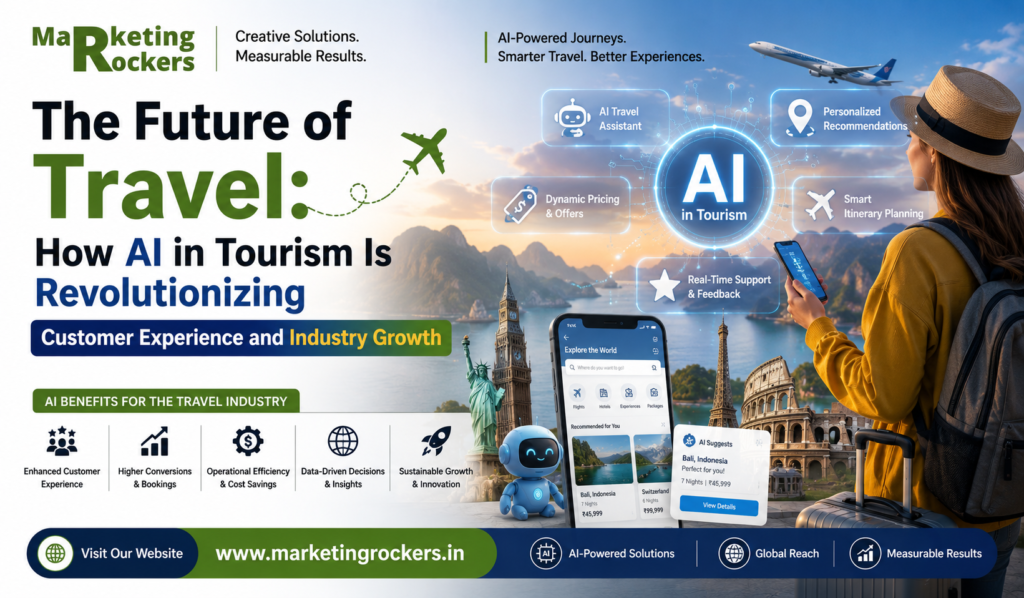
Think about the last time you planned a trip. The endless browser tabs. Flights on one site, hotels on another, reviews on a third, and somehow you still were not sure if you were getting a good deal. That entire experience is being dismantled in 2026 and rebuilt into something a lot more intelligent. AI in tourism has crossed the line from buzzword to actual infrastructure, and the travel brands that have figured this out are pulling ahead of everyone else very quickly.
Here is what is actually happening and why it matters whether you are a traveler, a tour operator, or a hospitality business trying to stay competitive.
India Is Leading This Shift—Not Following It
This is the part that surprises most people. India is not catching up on AI adoption in travel. It is leading it. According to the 2026 Agoda Travel Outlook Report, 33% of Indian travelers are already using AI to plan trips, and 68% say they plan to use it for their next one. That is one of the highest adoption rates in the world, ahead of most Western markets.
The reasons are not complicated. Indian travelers are digitally native, mobile-first, and increasingly unwilling to spend four hours comparing options when an AI tool can do it in four seconds. And 88% of Indian travelers say they either trust or feel neutral about AI-generated travel recommendations. The resistance that slowed AI adoption in other markets simply does not exist here at the same level.
For travel businesses operating in India, AI in tourism is not a future trend to prepare for. It is a present reality to respond to.
What AI in the Travel Industry Is Actually Doing
There is a tendency to talk about AI in tourism in very abstract terms—personalization, efficiency, and customer experience. Here is what that actually looks like in practice.
Trip planning has moved from search to conversation. Travelers are no longer opening a search engine and clicking through ten results. They are asking ChatGPT or an AI travel assistant to build them a complete itinerary—flights, hotels, activities, restaurants, and budget—and getting a usable answer in under a minute. AI in the travel industry has effectively compressed what used to be a two-hour planning session into something that fits between meetings.
Pricing is now a real-time calculation, not a seasonal bracket. Hotels and airlines have always adjusted prices around demand. What AI has changed is the speed and sophistication of that adjustment. Prices now shift based on competitor rates, weather forecasts, local events, booking pace, and review sentiment—all at once, in real time. Businesses that are not doing this are leaving money on the table every single day.
Customer support no longer requires a human for every query. Questions like “Can I change my check-in date?” or “What is the baggage allowance?” do not need a person to answer them anymore. AI handles those around the clock and hands over to a human agent only when the situation genuinely requires judgment. For travel agencies and hotels dealing with high volumes during peak season, this is the difference between a manageable operation and a completely overwhelmed one.
Itineraries adjust themselves. This is the one that still feels like science fiction but is already happening. AI travel apps in 2026 monitor weather, transport delays, and crowd data in real time. If your afternoon walking tour is going to be rained out, the app reschedules it before the rain even starts and sends you an alternative. The static PDF itinerary is functionally dead.
How It Plays Out Across the Industry
| Segment | What AI Is Doing | The Real Impact |
|---|---|---|
| Hotels | Smart room assignment, AI concierge | Faster check-in, personalized stays |
| Airlines | Predictive maintenance, dynamic pricing | Fewer delays, better yield |
| Tour Operators | Automated proposals, AI itinerary tools | Faster conversion, less admin |
| OTAs | Real-time recommendations, price AI | Higher bookings, longer sessions |
| Destination Marketing | Crowd flow management, AI content | Less overtourism, wider distribution |
The Traveler Journey in 2026
Traveler decides they want to go somewhere
↓
AI surfaces destination ideas based on preferences + budget
↓
Full itinerary generated and ready to book in minutes
↓
Dynamic pricing secures the best available rate
↓
Pre-trip alerts flag delays, weather, and visa requirements
↓
In-destination AI handles changes, dining, and local recommendations
↓
Post-trip: feedback captured, next journey already personalized
The Part That Matters Most for Businesses
AI for tourism does not run on technology alone. It runs on good data, consistent digital presence, and traffic from the right channels. A hotel with a brilliant AI concierge but no visibility on Google is still losing bookings to a competitor with a basic website and strong SEO.
The businesses winning with AI in tourism industry right now are the ones who have sorted their digital foundation first—getting found, building trust, and then letting AI handle the experience layer once a traveler has actually arrived.
The competitive advantage in 2026 is not just having AI tools. It is having the digital presence that feeds them the right audience in the first place.
The Human Element Is Not Going Anywhere
Here is something worth saying clearly: AI is not removing the human experience from travel. If anything, it is protecting it. When the logistics are handled—the comparisons, the rebookings, the support queries—travelers and travel professionals both get back the thing they actually care about. The experience itself.
The travel companies doing this well are not replacing their people with AI. They are using AI in travel industry to make their people more effective and their customers more satisfied.
Why Choose Marketing Rockers?
The opportunity that AI in tourism is creating needs the right digital marketing engine to unlock it. Getting found by the right travellers—through search, paid ads, social media, and content—is what determines whether your AI-powered experience ever gets the chance to shine.
At Marketing Rockers, we help travel and hospitality businesses across India build exactly that foundation. From SEO that drives organic discovery to Google Ads targeting high-intent travelers to content that converts browsers into bookers, we handle the marketing layer that makes everything else work.
If your travel business is not reaching the customers it should, come talk to us.
📞 +91-9355700651 | 📧 info@marketingrockers.in
FAQs
1. Can AI plan a trip better than a human travel agent?
For comparing prices and building itineraries fast, yes. To really understand what kind of trip you need right now, that still needs a person.
2. What if the AI gets something wrong about my booking?
Always check visa requirements, entry guidelines, and booking confirmations on your own. Use AI to plan, but make sure to verify the important stuff manually before you travel.
3. Can I use AI travel tools in Hindi?
Some are, and more are adding Indian language support every few months. For now, English still gets you the most accurate results on most platforms.
4. Do I have to pay to use AI for travel planning?
Not necessarily. ChatGPT and several travel apps offer solid free plans. You only really need to pay when you want deeper features or more searches per day.